In this age of national promotion, how to reduce the price gracefully?

Today, the author wants to analyze the phenomenon of price reduction promotion in detail, hoping to answer three questions: what kind of goods are effective in price reduction? What are the effects of price reduction? How to effectively reduce the price without appearing Low?
Price reduction is perhaps one of the most frequently used words in our daily life.
- Taobao, Tmall’s store is doing price reduction promotion;
- The supermarket in the shopping center next to the company is cutting prices;
- The gift package of playing mobile games is reducing the price;
- Buy a video website member, bike-sharing monthly card is reducing the price;
- Even a lot of luxury accessories are promoted on Mr. Porter.
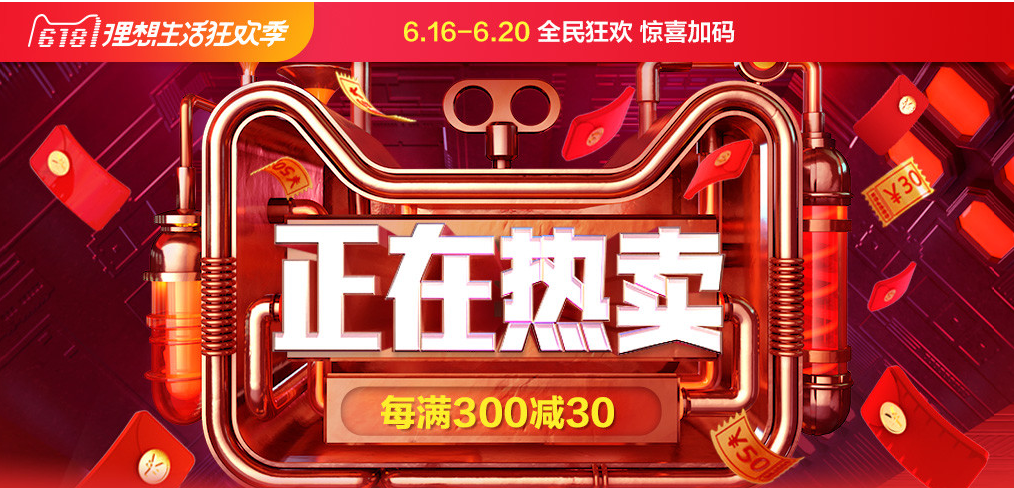
And we ourselves, as consumers surrounded by crazy bees, waves and butterflies, sometimes feel speechless about our behavior. Sometimes we see the price reduction products just like our long-lost brothers, and sometimes we see a lot of information about price reduction, but there is no wave at all in quiet inside.
What factors are influencing our sensitivity to price reduction information?
Today, I want to analyze the ubiquitous phenomenon of price reduction promotion with you in detail, hoping to answer three questions:
- What kind of commodity price reduction is effective?
- What are the effects of price reduction?
- How to effectively reduce the price without appearing Low?
Let’s imagine a scene first:
If you are walking in the street on a sunny summer day. Suddenly, I saw a figure coming at me. It was the opposite sex with clean clothes and good figure, but I couldn’t see my face clearly because of the distance.
At this time, most people will think: "This little sister/brother must be beautiful/handsome", and even a template of a beautiful face has appeared in their minds. Even though the appearance of the opposite sex in the distance is very general, at this moment, weWill look on the bright side first.
The reason why we think like this is related to a concept in social psychology.Psychological Distance (psychological distance)Related.
Psychological distance can be understood as our perception of the environment and things. For things that are strange, far from our physical distance, or long in time dimension, we all have a long psychological distance. On the contrary, we tend to get close psychological distance for familiar things with close physical distance or recent time.
A large number of studies show that: forFar psychological distanceHuman beings tend to think about its benefits. For things that are close to psychological distance, we will think more about its cost.
Therefore, when we are in a hazy state about the distant opposite sex, we tend to imagine that her appearance is attractive. This is also the main reason for the "back killer" and the "seeing death" of online dating.
Whether you only see the back of the opposite sex or communicate through the internet, the far psychological distance brings you imagination in a good direction.
When a couple begins to fall in love for a period of time, and the psychological distance is close, they will begin to pay attention to each other’s advantages (that is, the benefits gained from this relationship) to their shortcomings (costs), which is also a personal experience that many of us will have.
Back to the theme, the action of reducing the price, in the final analysis, is to tell consumers that you canAt a lower costTo get a profit. And the theory of psychological distance tells us:When consumers are psychologically far away from a commodity, they will not care about the cost at all.
Therefore,To be effective, price reduction promotion must have established a sense of value in consumers’ minds.As for how to build a sense of value for commodities, I can use a separate space in future articles, so I won’t start here.
But for many marketers, the more urgent problem to be solved is:
"What if my products haven’t had time to establish a sense of value, but they have to cut prices and rush sales because of the need of the capital chain?"
Here’s a way for everyone, that is-Quickly set up a value anchor to build a temporary sense of value..
In the previous article, I once told you the concept of value anchor, that is, we always find some known reference objects in our hearts when measuring the value of a thing. Therefore, we canArtificially create reference objects to quickly establish a sense of value..
Side-by-side anchoring is a common practice in the retail industry. Specifically, it is to put two goods with similar functions, capacity and appearance, but with similar prices side by side.
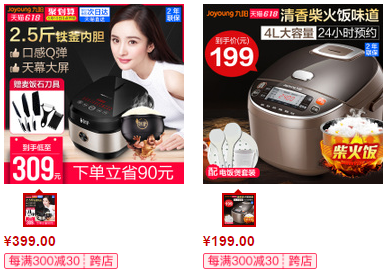
In this way, customers will feel that it is cost-effective to buy the low-priced one, because their judgment on the value of this commodity has been influenced by the high-priced one.
In addition to the same type of goods as the value anchor, you can also let the price of goods at other time points as the anchor, the most typical is the original price and special price.
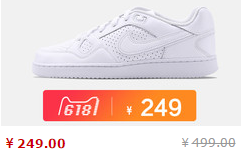
In this case, the calibrated original price will become the maximum value anchor of the commodity. Consumers will consider the special price as "this product is worth so much money".
Another operation is to make "being selected and bought by most people" as the biggest value anchor. When we shop on Taobao, we will subconsciously look at the number of comments and monthly sales.
The principle is that for the limbic system area of our brain, being selected by many people is equal to safety. This set of value choices is particularly important in the life of primitive tribes. For example, plants that have been eaten by many people are definitely non-toxic.

It is precisely because our brain has such a mechanism of filtering information and saving thinking energy that being chosen by many people often becomes a great source of value.
These practices are also common in transactional e-commerce, but this rapidly established sense of value can easily be diluted. If consumers shop in high cognitive mode, it will be easy to eliminate this short-lived sense of value by comparing other goods of the same type.
In the final analysis, building a real sense of value is the right way to accumulate long-term sales.
The role of price reduction is not only to rush sales. Many times, our understanding of price reduction only stays in a simple logic-when the price comes down, sales will go up, which is the demand curve of economics.
In fact, the role of price reduction is not just to increase sales. Here I will introduce the Product Life Cycle Model in marketing, and I will share it with you.What role can price reduction play in different stages of product life cycle?.
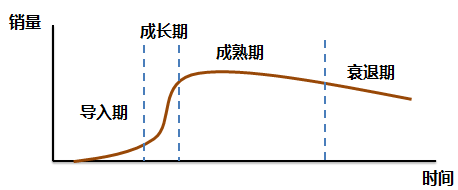
The product life cycle is mainly divided into four stages-introduction period, growth period, maturity period and decline period. Let’s take a look at the role of price reduction as the product life cycle goes on.
The scope of application of this period is the stage when the product has just been launched. At this time, the accumulation of user pool is small, and consumers’ sense of value of the product is not high. In fact, I don’t recommend you to do price reduction promotion at this time, because the reason has been mentioned in the last paragraph.
If you really want to do it, use the three methods mentioned above. But remember, it is difficult to accumulate a short sense of value to truly valuable users.
In the growing period of product life cycle, potential customers have a certain sense of value for our products. They may have heard about our products from friends, or they may be interested in the exposure of other marketing platforms. In short, more potential consumers have demand for products.
To achieve rapid growth at this time, it is necessary to reduce the concerns of potential customers, that is,Trial and error cost.
For example, there is a hole in front of the monkey, and we have successfully convinced them that there are bananas in the hole. Then we just need to make the monkey feel that the hole is not deep and will not fall.
In my previous article, I talked about the concept of perceived cost, that is, besides money, time and energy are also part of perceived cost. Price reduction can actually reduce these three types of perceived costs in different ways.
- Money cost:This is the most direct way to make consumers feel that "it is just cheap to buy now". I have seen a very successful case of price reduction before, that is, a membership system with fees, which launched an activity of reducing the price by 50% one day, then rising by 10% every day, and restoring the original price five days later. The output of this activity was so successful that many potential consumers who were still hesitating immediately placed orders.
- Time cost:The concept of this method is that the product manufacturer transforms the cost of money into the time cost that consumers feel. For example, if an online shop delivers goods, it will upgrade the slow delivery express to SF Express for free, so that consumers can receive the goods on the same day. Or a hotel provides customers with free airport shuttle service, which are all ways to reduce the time cost perceived by consumers.
- Energy cost:This method is to make consumers think about choosing goods without spending too much attention. The most typical thing is to give a price reduction when everyone in the whole category does not reduce the price. At this time, when consumers have the demand for this category, they can basically place an order without considering it.
If the biggest concern of consumers is the quality problem, such as the material problem of BB car or the limit problem of food, then returning goods for free without reason will be the best way to save energy.
In short, in the growth period, we shouldAnalyze the biggest concern of potential customers not to buy, and then eliminate that concern by making profits at cost..
When you reach the maturity of the goods, you basically have to go all out to sell them. Use it at this timeQuantity-related pricing methods will be more effective.For example, give a big discount if you buy enough, or share it with multiple friends for bargaining.
This period is generally not short, but it should be noted that the price reduction must be rhythmic and cannot last too long. The reason for this is that human genes determine that we are sensitive to change, but when the change becomes normal, we have no feeling.
What’s even more frightening is this.The sense of detachment caused by the sudden disappearance of positive changes will minimize our impression of related things.
For example:
If your boss tells you that starting today, you will be given a monthly salary as a bonus temporarily, you will be very happy, but this happiness will only last for a few weeks at most, and then you will get used to it.
A few months later, the boss said that this month’s bonus was gone, and there will be no bonus in the future. Not only is the pain caused by this loss far greater than the original happiness (because human beings suffer more from losses of the same magnitude than the happiness of gains), but you will hate your boss and this company and feel that they have exploited you.
Blindly reducing the price for a long time will hurt the brand value and it will be difficult to support the recovery of the original price in the future. This is also the case that many commodities in the retail industry can never return to their original prices once they are reduced in price.
Therefore, the price reduction of products should have a certain rhythm, which is reflected in:
Don’t let consumers think that you cut the price just to throw the goods to them in a hurry.
How to do this will be described in detail in the third part of this article.
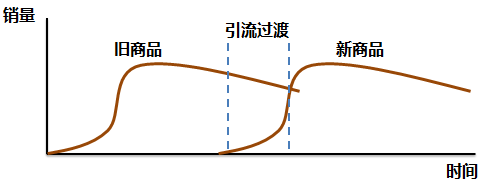
The sense of commodity value in recession is not as strong as in previous stages. Generally, at this time, the enterprise has planned to reactivate the market with other newly launched products, but the old goods usually still have the problem of inventory backlog.
If it is for the development of APP or service paying members, enterprises need to consider how to transform the consumers of the original products into the user pool of new products. At this time, old goods actually shoulder a mission. For physical retail stores and online retail stores, the purpose of price reduction promotion is to let more people step in or click into the store.
For service businesses, the purpose of reducing the price of the old business is to let more people know and be interested in the new service. Simply put, it’s alldrainage.
For drainage, the author described it in detail in a previous article, and interested readers can find out: we often talk about drainage, what are we talking about?
Now we put the drainage on the premise of price reduction and promotion, and we will find that: in fact, the premise of maximizing the price reduction and drainage isPurposefully connect old goods with new goods, and increase the exposure and sense of value of credit goods..
I have seen that many retailers want to use price reduction as a drainage, but because of the lack of purpose, the final result is just to let customers enter the store to buy goods at reduced prices and then check out.
If you ask these retailers how to sell more other goods at lower prices, their answer will be:
Try to keep customers in the store for a while.
The subtext is that the drainage product is only responsible for guiding customers into the store, and then we try to give a lot of other information.
Why is this usually not effective enough? You can recall the cognitive model theory I mentioned before. When customers want to enter the store to buy promotional items, they areIn the low cognitive mode, their only purpose is to get the goods at a reduced price quickly and finish the task.. At this time, it is often difficult to attract attention by giving too much messy information. So you have to find one.The destination goods are attached to the information..
For example, if a box of masks is used as a drainage product, then a better way is to bundle the mask with the new skin care products (such as toner and makeup remover) that need to be promoted.
If it’s a service charge, it’s best to sell old services at a reduced price and send new services for trial at the same time, in order to encourage users to download and install and try new services.
In short, whether it is drainage or bundled sales, it is necessary to give customers a feeling that "I have already bought cheap goods, so I can try new products".
In the above, we mentioned that when we rush to sell products at the mature stage, we need to keep the pace and not always reduce the price. Here I will give you an analysis of how to do this rhythm well.
For consumers, the worst perception of price reduction is:
"Where there is such a good business in the world that makes profits for no reason, there must be something fishy."
Nowadays, the lower the price of many goods, the less people buy them, just because consumers don’t have them.Perceive the reason for price reduction. Therefore, as a merchant, the best relationship with consumers in the category of price reduction is the sense of feedback. To put it bluntly, it means "I want to give back to you for a special reason, so I reduced the price."
In fact, in principle, this is related to the attribution theory in psychology.
Psychologists once did an experiment to make an office printer queue up to print, and at this time an experimenter cut in line.
Scenario one is that the experimenter cuts in line without saying anything; Scenario 2 is that when the experimenter cuts in line, he will say "Hello, please let me print first, because I am in a hurry".
The result of the experiment is that the probability that the subjects are willing to be cut in line in scenario 2 is more than doubled. However, in fact, if we re-examine, the experimenter’s statement "Because I am in a hurry" doesn’t have any substance, but because he gives a reason that seems to be the reason, people are more willing to make profits.
The implication here is that when we ask others to do something, if we can give a reason (although it may be boring), the will of others will increase greatly.
So what we have to do when we reduce the price is to provide consumers with a reason, or particularity. This will ensure that businesses give consumers a reason and consumers give themselves a reason to shop. ("It’s not that I don’t want to chop my hands, but it’s just XX now, so I don’t buy it for nothing")
Now, we will think about what particularity can be used as a reason to give back to consumers when they shop.
"Because you are special, we want to give back to you."
Membership is the most commonly used way to reduce prices. Whether it’s a big supermarket like Sam member store or Metro, or a restaurant APP or game, it’s a good reason to give members a discount.
It should be noted that besides membership, other identities can be created. For example, they all belong to a certain constellation, or even exceed a certain height, or even it is reported recently that a Marvel Comics diehard fan in the United States has watched Avengers 3 for more than 50 times, which is a good opportunity to create a special consumer identity.
"Because now is a special moment, I want to give back to you."
We are most familiar with the recent rise of 618, double 11, Double 12 and so on. In addition, there are celebrations of various physical stores and linkage activities of games.
There are two kinds of special time: tradition and man-made.
- Traditions are various festivals, such as Thanksgiving Day and Mother’s Day.
- Man-made is the activity of the above-mentioned e-commerce platform, or its own store celebration and opening.
One thing to note here is that for small platforms or small businesses, it is best to be natural or external at a special time, which is the so-called heat. For example, a physical store also participates in Double 12 activities, or a retail store celebrates Thanksgiving. Generally speaking, only the time particularity created by the big platform is more convincing, that is, it is truly special.
"Because you are here, I want to give back to you."
The particularity of place category is relatively less used by everyone. For example, knowing that there have been several days of heavy rains in Zhejiang Province, a supermarket chain decided to give 20% discount on rain gear in all stores in Zhejiang Province. Or a newly opened shopping center, where all the stores have a 20% discount.
"Because this product you bought is special, I want to give it back to you."
For example, we all know that parents will prepare schoolbags and stationery for their children when they are ready to start school in August. These goods can be reduced in price at this time.
Or when consumers buy baby milk powder, they can reduce the price of pacifiers and bottles at the same time, because these are things that babies can use, and it is not easy to be a novice mother.
"Because there is not much stock left in this commodity, I want to give it back to you."
This kind of scene most often happens in clothes, shoes and other stylish goods that need personalization. Usually, because the remaining inventory of goods is only suitable for some people, such as clothes that are too big or shoes that are too small, merchants will cut prices and clean up the tail goods.
"Because you bought it through this channel, I want to give it back to you."
Outlets is a typical special sales channel for price reduction, because consumers go to the factory store to buy it, so the price reduction is preferential. Or for service goods, because consumers download apps or register members from a certain channel, they are given price concessions.
Channel particularity usually needs to be linked with business strategy, and at the same time aschannel promotionA means of.
Another extension of the special sales channel is the special payment method. Now many merchants will reduce the price of consumers who use a certain payment method (such as cloud payment). If you want to cut prices, you can take this opportunity to further increase the depth of price reduction.
"Because it happens to be you, I want to give back to you."
Randomness is attributed to luck. For example, getting a lucky roulette wheel, or randomly drawing cards, is essentially a random selection of price reduction targets.
This way is basically unaffected by time and place, and the drawn consumers are basically willing to spend. However, it should be noted that only this random probability is not equal to 100%, which is a good special reason.
"Because of your efforts, I want to give back to you."
The essence of this reason for price reduction is that when we have paid (time and energy) for something, we will have a sense of control over it, and our evaluation of things that we have a sense of control will usually increase subjectively.
For example, when a seller sells a house, his valuation is always higher than that of the buyer. One of the reasons for this is that he thinks that the sense of control over the house increases the perceived value.
Therefore, if you want to reduce the price of a commodity well, it is best to let consumers pay for this price. For example, consumers need to snap up a limited number of goods at reduced prices on the hour, or collect cards and prints for a long time to get reduced prices, or even play some small games to get reduced prices.
Today, I have slightly summarized some basic analysis about the behavior of price reduction, mainly including:
- It is hooliganism to reduce the price of goods that have no sense of value, but to play hooliganism well, try to give your goods a temporary sense of value by anchoring value;
- Price reduction plays different roles in different stages of the product life cycle. Identify the stage of your product and understand what is affecting consumers’ purchase at the current stage to avoid blind price reduction.
- In order to maintain the sense of brand and product value, price reduction must be rhythmic. Through identity, time, place, goods, inventory, sales channels, randomness and attribution, the price can be reduced more elegantly.
Author: Mr. Ha, WeChat WeChat official account: Mr. Ha (ID: yuanwai-he)
This article was originally published by Mr. @ He. Everyone is a product manager. Reprinting is prohibited without permission.
The title map comes from Unsplash and is based on CC0 protocol.